

I finished up my previous series pretty quick, and the next thing on the list was something with a lot more substance: Before the Pharaohs by Julian Heath. This book is about the archaeology of Ancient Egypt before it became what most people think of as Ancient Egypt.
I really liked this book. It was so informative on a period of history I think most people are ignorant of. It was really well explained and very descriptive. The author also included a bunch of links to, not only images or artifacts, but publications that I will definitely be looking into later.
I’m not gonna go over everything in the book (I think you should definitely go read it), but I do wanna highlight the things that I found most interesting. The timeline in the book is divided into 3 major periods:
- Paleolithic
- Neolithic
- Naqada / Predynastic
- List of Links to Further Reading

🌟🌟🌟🌟🌟
Spoilers and Images of Mummified Bodies Ahead!
Paleolithic
We begin our story in the Lower Paleolithic (aprox 3.3 mill years ago). The Nile Delta was more like a savanna then, so there were more resources available in the area for both people and animals. We have stone tools from this era, but skeletons aren’t (and probably won’t be) found. The ‘Out of Africa’ theory of the spread of humans is the most widely believed, and the one with the most evidence. The best picture we have of what early people looked like is the remains of Turkana boy in Kenya (1.56 mill ya).
Side note – bones dated to 1.7 mill ya were found in Georgia (the country) leading some to suggest people evolved in Asia first, then spread out. Unfortunately for those researchers tho, bones found in Jordan are even older (1.5 mill ya) and Turkana boy older still. Stone tools from other species of Human are also found in the area, indicating they passed through.
Acheulean style tools are made by Homo Erectus, and these tools being found in Egypt made it clear that there was an Egypt before Egypt. At the time, people (read Christian Europeans) didn’t think the world was older than Oct 23, 4004 BC (per the Bible), so that must be Egypt’s max age, and the Pharaohs spring into being an established civilization. When Acheulean tools were discovered, it took till Darwin published the Theory of Evolution for people to even consider a civilization being older than that. Once they accepted they were there, they found loads of them. What exactly these hand axe where used for is still debated – we know butchering was one use, don’t know the others tho – as well as why they look like that.

The Middle Palaeolithic (300k ya) is where we see lots of quarry sites, as well as the earliest burial in the area. There are multiple sites that date to this period, burials, living sites, workshops, and butchery sites can all be found in what is now desert, but what was then a really nice place to be. One of the most famous is The Great Barrier Plateau; a huge area (and current national park) known for its prehistoric rock-art sites. It also has many other archeological sites, notably one that has clear evidence of being a hunting spot, but there is yet to be any evidence of the type of game that would have been hunted in the area.
A common theory at the time, was that people used rock art to ‘supernaturally’ ensure a good hunt, and given the excellent view of the hunting ground (the art is on sandstone cliffs) this was a theory that was considered. Nowadays this is a much less popular idea. Stylistically, the drawings resemble the ones at other famous European sites, including animals with legs bent back unnaturally and headless women (Gönnersdorf style). The sea level of the Mediterranean was much lower at this time so it’s not impossible that they could have met and exchanged ideas (not enough evidence for this tho).
The art at El-Hosh includes images of mushroom like shapes that closely resemble a type of fish trap, one that is still used in the area today. This area is also where the famous ‘masterpiece‘ was found. This particular piece of rock art is made up of lines and curves, and the meaning is still not understood
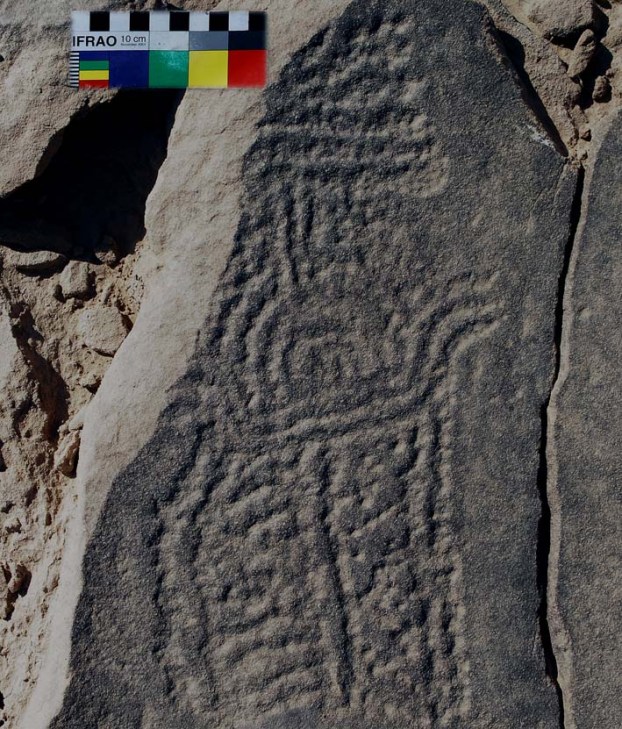
Gharb Aswan – while most famous for its tombs – also has what is probably a game drive, probably for trapping gazelle. The rock art found here – on a cliff – shows crocodiles and a boy? with braided/knotted hair and what is probably a dog. There is also art of a crocodile beach, and a more complex set of circles and lines. The art is mostly around a single place on the cliff and so it’s reasonable to say that this place was ‘special’. There is a whirlpool nearby, and that might be what the circles and lines are depicting
The paintings at 2 Wadi Sura caves are the most famous – the Cave of Beasts and the Cave of Swimmers.
The cave of swimmers was in a movie : The English Patient (1996) so people come to see it, unfortunately the art here has been damaged by tourists who chipped away at it 😠. There are over a hundred people figures in the cave, each doing something. There is also a depiction of some sort of chief figure – a theory is that the Egyptian Sed festival had its origins in whatever they were doing, as some of the depictions are the same, but this is not widely accepted.
The cave of beasts – of which there is a 3D model – is one of the most decorated rock art sites in the world, containing over 8,000 images, discovered by an Italian businessman and his son in 2002. This cave is full of different scenes, some familiar and other not so. It also includes scenes that some suggest are reminiscent of Ancient Egyptian cosmology and the journey through the underworld. There is even what appears to be Nut and Geb (the sky and earth) but these connections are debated as the same art is seen in Gilf Kebir (The Great Barrier Plateau), suggesting that the cosmology started there and people moved towards the Nile before becoming the civilization we are familiar with; this is not completely out of the question as the desert became dry and pushed people towards the river around this time.
At the Dakhla and Kharga Oases, the rocks here seem to have been picked for practicality instead of a special reason. The most numerous animal depicted is the Oryx. It also depicts giraffe, which some speculate to be of religious significance – either as sun bearers or representations of fertility. ‘Fat Ladies’ and ‘Thin Men’ can also be seen through the cave (and with boats?).
There is also art of what appears to be spiders and something else with lots of lines (like a comb). These spiders are depicted sunbathing, and even the rock itself is sun-facing. There is a species of spider in the desert that does this irl so…maybe? The paintings of ‘Fat Ladies’ were often in prominent places and some of them are even accompanied by giraffes. This suggests they were important somehow. The images were also often richly decorated.
Neolithic
Neolithic (9,000BC – 4,000BC) settlements mark the end of the hunter-gatherer lifestyle and a move to more sedentary life. The Nabta Playa Basin (located near the border with Sudan) has one of the best of these sites. The Arkinian industry is found in both Nabta Playa and Sudan – where it originates – so its possible people moved north and settled there. Cattle bones and teeth in the area suggest this was a migratory herding population and that the cows were kept for milk and blood more than meat, similar to modern East African populations. The idea that there were domesticated cattle in the area at the time is debated, but the evidence for is that they would not have survived this far into the desert alone without permanent water and, linguistically, the words for cattle and herding in the area date to before agriculture.
Found near Wadi El-Obeiyid cave, the people who were here settled along an ancient lake, and the stone houses they built suggest a more permanent settlement (though probably not year round). Evidence of crops from the Levant and various domesticated animals is found here too. Wild sorghum (shout out to my favourite staple food) made up 40% of the grain found and was probably what they preferred because of its larger size and better nutrition. Arrowheads were also found here, and they are of a larger size so some think these were specifically for use against people.
Based on current evidence, the Fayum A culture (at the Fayum Oasis) is the first neolithic culture in Egypt representing a step towards the civilization that we are familiar with. Originally settled around a large saltwater lake (lake Moeris), grain silos found here still have some seeds in them (apparently the British museum even tried to germinate some – spoiler it didn’t work). Lots of evidence of daily life was uncovered here, and since they farmed near hippos, they probably couldn’t leave (i.e. be nomadic) since they would eat everything; giving more credence to them being a fully neolithic culture.
At the Dakhla oasis, the Bashendi and Sheikh Muftah cultures were identified. One of the Bashendi sites is the larges in NE Africa and can be classed as a true stone age village. Slab constructions were common in the early phase of this culture and towards the latter end they were abandoned in favour of open-air localities. Helwan points were also found here – arrows with notched sides – and these are of Levantine origin, indicating trade or even immigration. Sheikh Muftah peoples were probably nomadic pastoralists (like the Bashendi) and their sites reflect this lifestyle. Skeletons found here indicate a hard life, with malnutrition and hard labour evident.
Nabta Playa is home to a ceremonial complex containing a unique set of monuments created by pastoralists. The earliest of these is found in the valley of the sacrifices and the ones that were excavated contained cattle burials. There is also a stone circle (calendar) that was aligned astronomically, what it aligns to is still debated. It could be the stars of Orion’s belt, or the rising of Sirius. Human sacrifice is also a theory that is mentioned, although not as likely (they found skulls in a few burial grounds).
At another site (by another people) a large stone that looks like a cow was buried under a megalith, probably as a ritual burial, and probably to represent the death on one on the trail.
Found at the edge of a neolithic settlement, the remains of 70 people were found here, giving us a picture of life at the time. Some of the bones show evidence of being moved (not being in the right order mainly) indicating that keeping the body together for burial was important. Each of the graves was richly decorated. Various grave goods were recovered, including a mica fish that was apparently meant to be some sort of art hanging!
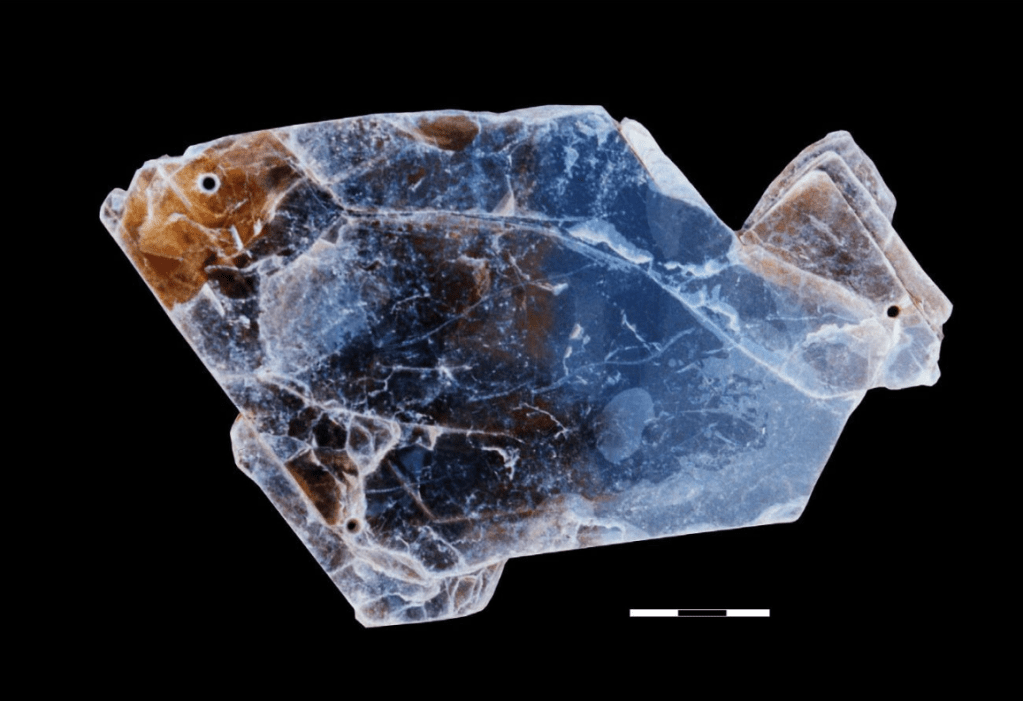
A life size tooth carving was also found, and that could have been intended as a replacement for a real tooth. An infant cemetery was also found, containing about 40 newborns.
Many people have an idea of stone age people as being peaceful hunter-gatherers, but violence was not a stranger to them. In Kenya for example there is evidence of a 10,000 year old massacre, with many bodies found face down and some (including a pregnant woman) having been bound before they were killed.
The Jebel Sahaba War Cemetary, located in Sudan (Site 117 – part of excavations in areas to be flooded by the building of the Aswan High Dam) contains the earliest record of inter-communal violence in the archaeological record. Some of the bones even have signs of overkill. The change in climate is the most probable reason for the violence seen, as the desert is a difficult place to live, and resources around the nile would have been something worth fighting for.
Bodies in the Late Predynastic period were buried in the sand, and this was naturally a great way of preserving them, as the sand absorbed dissolved juices from the body leaving it dried out. This is probably where the Ancient Egyptian burial practices and the idea of preservation into the afterlife came about. Gebelein Man A (also known as Ginger cause of his hair) was bought and sent to the British Museum (in shady conditions as was the norm at the time) and has been constantly on display since (120 years), although only recently was his cause of death figured out. He was stabbed in the back (!!!!) and this was either murder or he died in a conflict as the pharaonic dynasties were forming.

Merimde Beni Salama is a large site at which there is evidence of people having established a little sort of town. The houses found here are arranged in rows where there were presumably streets running between them. There are also recessed pots that were probably used for storing grain/water/etc. in the houses.
In the Badarian Culture some of the graves have been found to have evidence of the same mummification technique used by the later Pharaonic dynasties. Various goods were placed in the graves that were excavated, including jewelry, spoons, beads, hairpins, copper rings, makeup, and so much more.
Naqada/Predynastic
Between Naqada and Ballas, more than 2000 graves were discovered. Unfortunately, many of them were plundered (both in the past by contemporaries and all the way to today). Interestingly the guy who first dug here (British) was FIRM believer that the Egyptians were immigrants from Libya, then he was proven wrong by a colleague (French), and then he went back and he was the one to ultimately determine and come up with the timeline for the Naqada people
Much of the knowledge we have of this culture comes from its burials and grave sites. The pottery that was found here is of two types, with the painted ‘Cross-line ware’ style becoming favoured over time. This pottery had various scened displayed, many of which are hunting – this becomes a thing for the Pharaohs too. There is also evidence of them expanding south and trading with cultures in Sudan. The Naqada culture is also where we start to see the craftsmanship that is the precursor to the stone working expertise of the Pharaohs.
One of the most notable pieces from this culture is the Gebel El-Arak Knife. This piece was acquired the old way (read stolen and removed from its context) so it’s authenticity and actual location of origin are sometimes called into question, but most agree that it is definitely of the Naqaba culture. The handle is carved beautifully and it currently sits at the Louvre. Trace elements of gold foil have been found, suggesting it was much more elaborate than it is now. The images are Sumerian, likely depicting the king of Uruk (some say the god El).

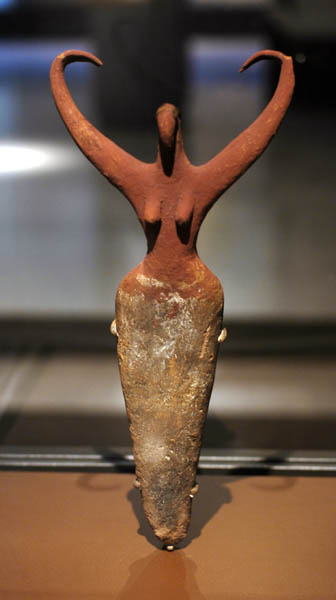
‘Bird head’ lady figures are some of the most curious artifacts found from this culture. We don’t know what they mean, but various interpretations exist – Mother goddess, votive offering, shabti? Some graves are noticeably ‘wealthier’ than others, indicating some sort of social stratification, and this trend was accelerated in the later periods of the Naqada culture.
Under a Roman/Ptolemaic temple, evidence of predynastic Egypt was found, and this was attributed to ‘Eastern invaders’ (cause people thought Egyptians didn’t exist in Egypt before). The statues found here were only partial, but they dated to the Naqada civilization (The Coptos Colossi).
Named as the earliest historical record from Egypt, the Narmer Palette was discovered in Nekhen (now Kom El Ahmar). Originally thought to represent a real battle and the unification of Upper and Lower Egypt, it is now thought that the symbols carved into it represent a more cosmological series of events. Another palette – the Two Dogs Palette – represents the animals that would have been active at the time, both real and imagined.

The oldest known painted tomb in the world, Tomb 100, this is one of the most important pre-dynastic finds in Egypt. Unfortunately, this tomb was plundered at some point so there wasn’t much left, not even bones. The walls here are thought to depict an invasion by Sumerians.

Expeditions at Nekhen (aka Hierakonpolis) are ongoing, and many discoveries have been made here. Some of the coolest stuff comes from HK6 – the elite burial ground. Here we also find evidence of people and animals being buried with their leaders/owners. Unfortunately, the forced nature of this is slightly more apparent here, as the bodies of retainers are very young (15). Funeral masks were also found – probably the precursors to the Dynastic ones, like King Tut’s. There were also items that suggested a connection to Nubia. The oldest known breweries in the world were also discovered here.
One of the most important Naqada sites – Umm El-Qa’ab – is found in Abydos. The landscape is literally littered with shards of pottery. Here is also where we find a tomb that may have belonged to King Scorpion (who’s macehead we only have pieces of, along with the macehead of King Narmer).


There were definitely sooo many more interesting facts (not to mention names) that were in the book that I couldn’t fit in this post, but here is a list of further readings and publications to look into if you’re interested:
- Neolithic Settlements – PDF
- Badarian Civilisation – PDF
- Expeditions at Hierakonpolis – Link
- Earliest Burial – Link
- Masterpiece – Link
- Cave of Beasts – 3D model Link
- Mica Fish – Link
- Gebelein Man – Link
- Badarian Grave Figure – Link
- Gebel El-Arak Knife – Link
- Bird Head Figures – Link
- Two Dogs Palette – Link
- Tomb 100 – Link
 Amateur Amalgam
Leave a comment